


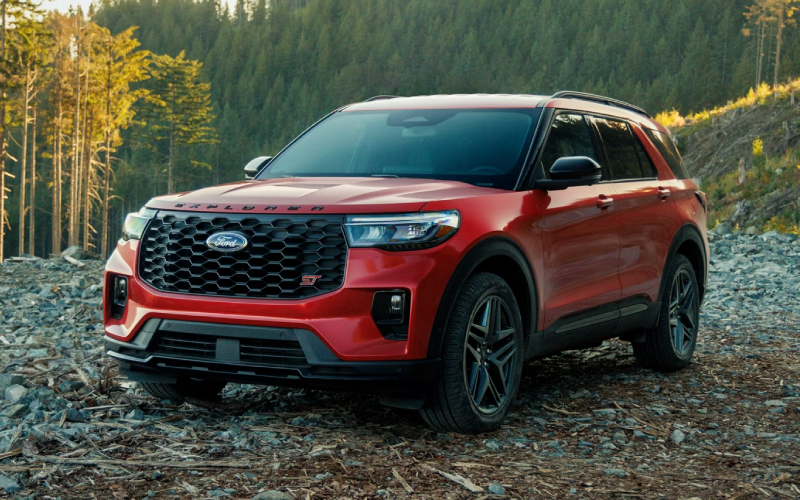
Brown Motors - 2026 Ford Explorer vs 2026 Chevrolet Traverse — Is BlueCruise or Super Cruise the Better Hands-Free System for Daily Drives around Petoskey, MI?
Hands-free highway systems have moved from future tech to real-world convenience, and two of the most prominent are BlueCruise on the Ford side and Super Cruise® on the Chevrolet side. If you are comparing a 2026 Ford Explorer with available BlueCruise to a 2026 Chevrolet Traverse with available Super Cruise®, you are likely asking a practical question: which system helps more during everyday commuting and road trips around Northern Michigan?
At a high level, both systems enable hands-free driving on compatible, pre-mapped roads, using a driver-facing camera to ensure your eyes remain on the road. Both maintain lane position and speed, and both can reduce fatigue on long stretches between town centers and trailheads. The details, however, matter to real owners. BlueCruise integrates seamlessly with the 2026 Explorer’s Ford Digital Experience and steering tuning, reinforcing the already-relaxed highway manner created by the SUV’s rear-wheel-drive architecture. Super Cruise® in the Traverse pairs with a wide 17.7-inch center display and 11-inch Driver Information Center, and select trims include a multi-year plan for in-vehicle connected services through OnStar®.
- Supported roads: Both cover extensive compatible highways and selected divided roads, regularly updated via the cloud.
- Driver monitoring: Each uses an infrared camera to confirm attention; if you look away too long, the system requests takeover.
- Lane control: Lane centering is core to both; if equipped, features like automatic lane change can further assist on multi-lane routes.
- System integration: BlueCruise ties into the 2026 Explorer’s steering feel and drive modes, while Super Cruise® aligns with the Traverse’s driver information displays.
- Updates: Over-the-air updates can improve maps and features over time, helping both systems stay current.
In daily use, the Explorer’s calm, planted demeanor at speed—helped by its rear-drive foundation and 10-speed automatic—sets BlueCruise up for success. The SUV feels unhurried yet responsive, which makes handoffs between you and the system feel natural. In the Traverse, Super Cruise® benefits from clear prompts on the driver display and an equally robust driver-monitoring strategy. For many families, the decision comes down to which cabin interface and on-road character feel more intuitive during a real test drive.
To help, take a structured approach when you evaluate both SUVs and their hands-free systems on familiar routes:
- Plan your route: Choose a compatible highway segment with on-ramps, lane merges, and gentle curves.
- Test in traffic: Engage the system during light and moderate traffic to feel speed adjustments and lane centering consistency.
- Evaluate prompts: Note how each system communicates—visual cues, chimes, and steering-wheel indicators—and whether the guidance feels intuitive.
- Check transitions: Pay attention to how smoothly engagement and disengagement occur at construction zones or exits.
- Review integration: Explore how navigation, Apple CarPlay, and Android Auto interact with the driver-assist displays in each SUV.
For families who spend long stretches on I-75, US-31, or weekend routes to trailheads, both systems deliver meaningful relief. The 2026 Ford Explorer adds a driving feel that complements its hands-free capability, especially when paired with the available performance or off-road trims that keep the SUV poised in all seasons. Meanwhile, the 2026 Chevrolet Traverse emphasizes cabin space and a straightforward, screen-forward presentation that’s easy to read at a glance.
If your priority is an SUV whose chassis and driver-assist tech feel like one well-tuned package, the Explorer deserves the first test drive. For shoppers who value hands-free convenience in a space-maximizing layout, the Traverse remains a compelling alternative. Either way, it is worth testing both systems over the same roads to decide which better matches your habits and comfort level.
Brown Motors, serving Charlevoix, Cheboygan, and Petoskey, can walk you through hands-free feature availability by trim, how updates work, and what to expect during ownership. We recommend spending time with each vehicle’s settings, prompts, and supported-roadway maps to ensure your confidence grows as the miles add up.
Frequently Asked Questions:
Can I use BlueCruise or Super Cruise® in bad weather?
Hands-free systems rely on clear lane markings, reliable map data, and sensors that are not obstructed. Heavy snow, ice, or road grime may limit operation. Both systems will prompt you to take control if conditions are not suitable.
Do these systems work on every road?
No. BlueCruise and Super Cruise® operate only on compatible, pre-mapped roads. Their coverage areas continue to expand through updates, but you must remain ready to steer and brake at all times.
Will my phone apps still work while hands-free is active?
Yes. Features like Apple CarPlay and Android Auto continue to function. Audio, navigation, and calls can be managed through the vehicle’s interface and steering-wheel controls, keeping your focus forward while the system assists.